
Another Day at the Lake, Another Book, and a Lesson in Perspective
Day four at the lake, still no boat, and another book finished. This afternoon, as I wrapped up Give and Take by Adam Grant, I found myself reflecting not just on the book, but on a pair of photos I took last night from the end of the dock. Both shots were snapped from the same spot at the same time...one with "night sight" enabled, the other without.

The first image, without night sight, is almost impenetrably dark. The second, with night sight, is artificially bright, revealing details that weren’t visible to the naked eye. If I’m honest, the real view was somewhere in between: clearer than the pitch-black photo, but nowhere near as luminous as the enhanced one.

It struck me that this is a perfect metaphor for how we experience generosity, burnout, and being taken advantage of.
How Our Perspective Gets Distorted
When you’re a giver (always helping, always saying yes) it’s easy to lose clarity about your own boundaries and needs. Like looking at the lake through the lens of a camera, your perception can get distorted in either direction:
- Burnout or Exploitation: When you’re depleted or being taken advantage of, everything feels dim. You miss the beauty and nuance of the moment, focusing only on the exhaustion or the sense of being used. It’s like the no-night-sight photo: there’s a world out there, but you can’t see it.
- Overcompensation or Idealizing Generosity: On the flip side, sometimes we try to see only the good—amplifying every act of giving, telling ourselves it’s all worth it, ignoring the warning signs. This is the night sight photo: everything is unnaturally bright, but it’s not quite real. The details are there, but they’re exaggerated, and you lose sight of the actual balance.
In reality, healthy generosity is about seeing things as they are: clear, but not artificially bright; honest, but not hopelessly dark. It’s about finding that middle ground where you can appreciate the view, set boundaries, and still be open to opportunities.
Give and Take: The Book’s Core Idea
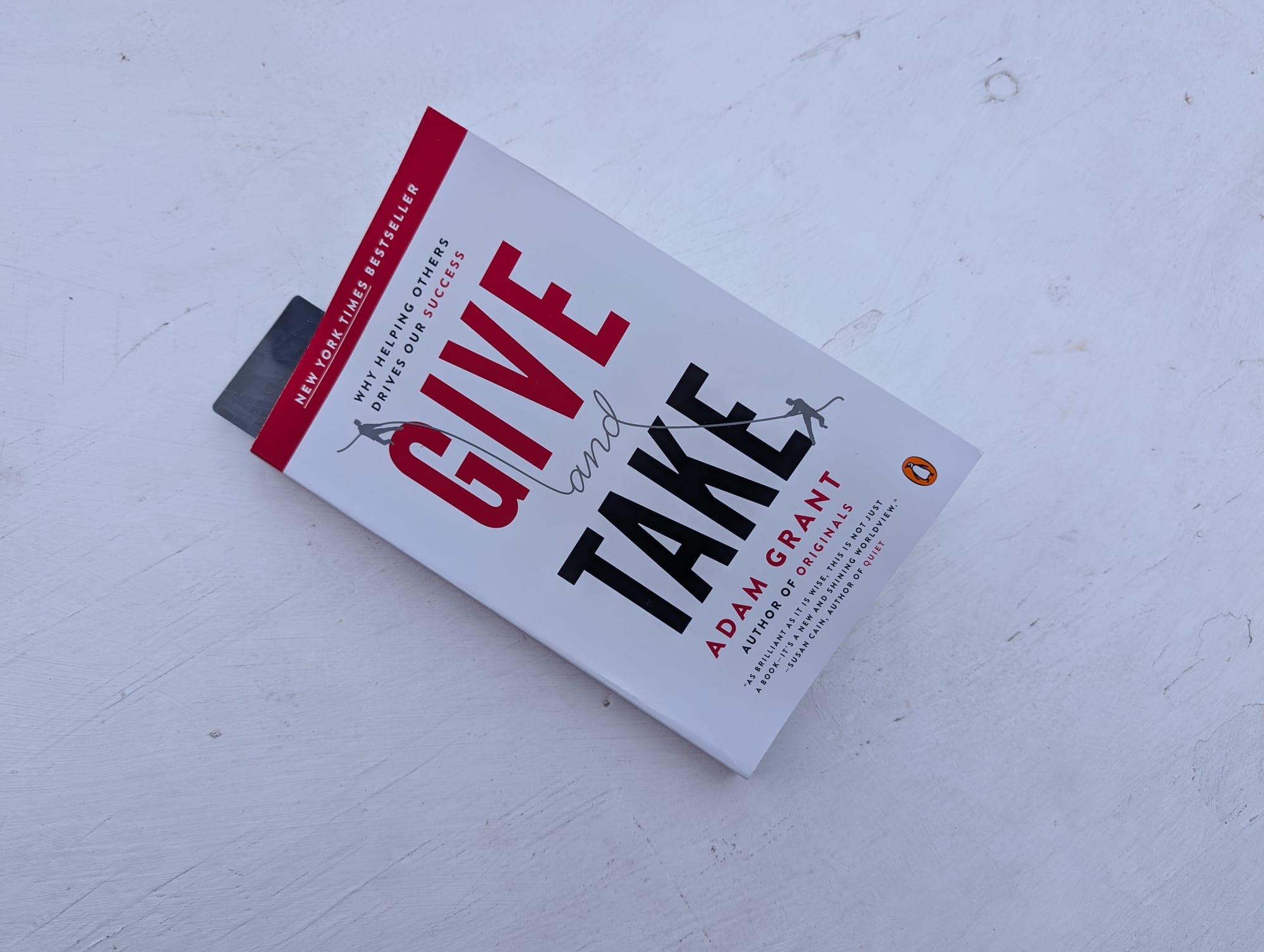
Adam Grant’s Give and Take explores three reciprocity styles:
- Givers: Those who help others without expecting anything in return.
- Takers: Those who try to get as much as possible from others.
- Matchers: Those who aim for balance, keeping score to ensure fairness.
Grant argues that givers can end up both at the top and bottom of the success ladder. The difference lies in how they manage their giving, whether they’re strategic and set boundaries, or whether they give indiscriminately and burn out.
The book is full of stories and research showing that generosity pays off in the long run, but only if you avoid the traps of overgiving and exploitation. Unfortunately, the actionable framework for how to do this is thin, and the advice to "be more generous" is repeated more often than it’s fleshed out.
My Perspective: The Luck Surface Area
One idea I kept coming back to while reading (though it’s not in Grant’s book) is the concept of “luck surface area.” This is a mental model I picked up elsewhere, and it’s become my personal lens for understanding why generosity works. The idea is simple: the more you put yourself out there, help others, and share ideas, the more opportunities will eventually find you. Sometimes the payoff is immediate, sometimes it takes years, but expanding your luck surface area is about being open and generous in a way that attracts serendipity.
This complements Grant’s thesis, but it’s not something he covers directly. And, just like with the photos, if you’re not careful, you can lose sight of reality, either by giving too much and burning out, or by being so guarded that you miss out on genuine connections.
What’s Missing: A Framework for Clarity
Much like trying to photograph a moonlit lake, finding the right balance in generosity is tricky. Give and Take gives you the big picture, but not the settings for your camera. There’s little guidance on:
- How to decide when to give, when to match, and when to hold back
- How to spot takers and protect yourself from exploitation
- How to set boundaries without feeling guilty
- How to assess your own style and adjust as needed
The most successful givers, Grant notes, are those who set boundaries and align their giving with their own goals. But the book leaves you wanting more on how to actually do this in practice.
Key Takeaways
- Generosity is powerful, but only when paired with self-awareness and boundaries.
- Our perception of giving, like our perception of a nighttime scene, can be distorted by burnout or by idealizing our own generosity.
- The real challenge is seeing clearly: knowing when to give, when to protect your energy, and how to maintain authentic connections.
- Expanding your luck surface area is a useful way to think about the long-term benefits of generosity, but it’s not a substitute for practical boundaries.
Final Thoughts
Reading Give and Take at the lake, with those two photos in mind, reminded me that clarity is everything. Whether you’re navigating generosity, boundaries, or just trying to see the world as it is, it’s easy to get lost in the dark or blinded by artificial brightness. The trick is to find that honest middle ground, where you can see enough to make good decisions, but not so much that you lose touch with reality.
If you’ve read Give and Take, I’d love to hear how you find that balance. And if you know a book that actually delivers a framework for being a smart giver, let me know. My reading list is starting to dwindle (even though Megan teased me about how many books I had delivered), especially if the boat doesn’t show up tomorrow.