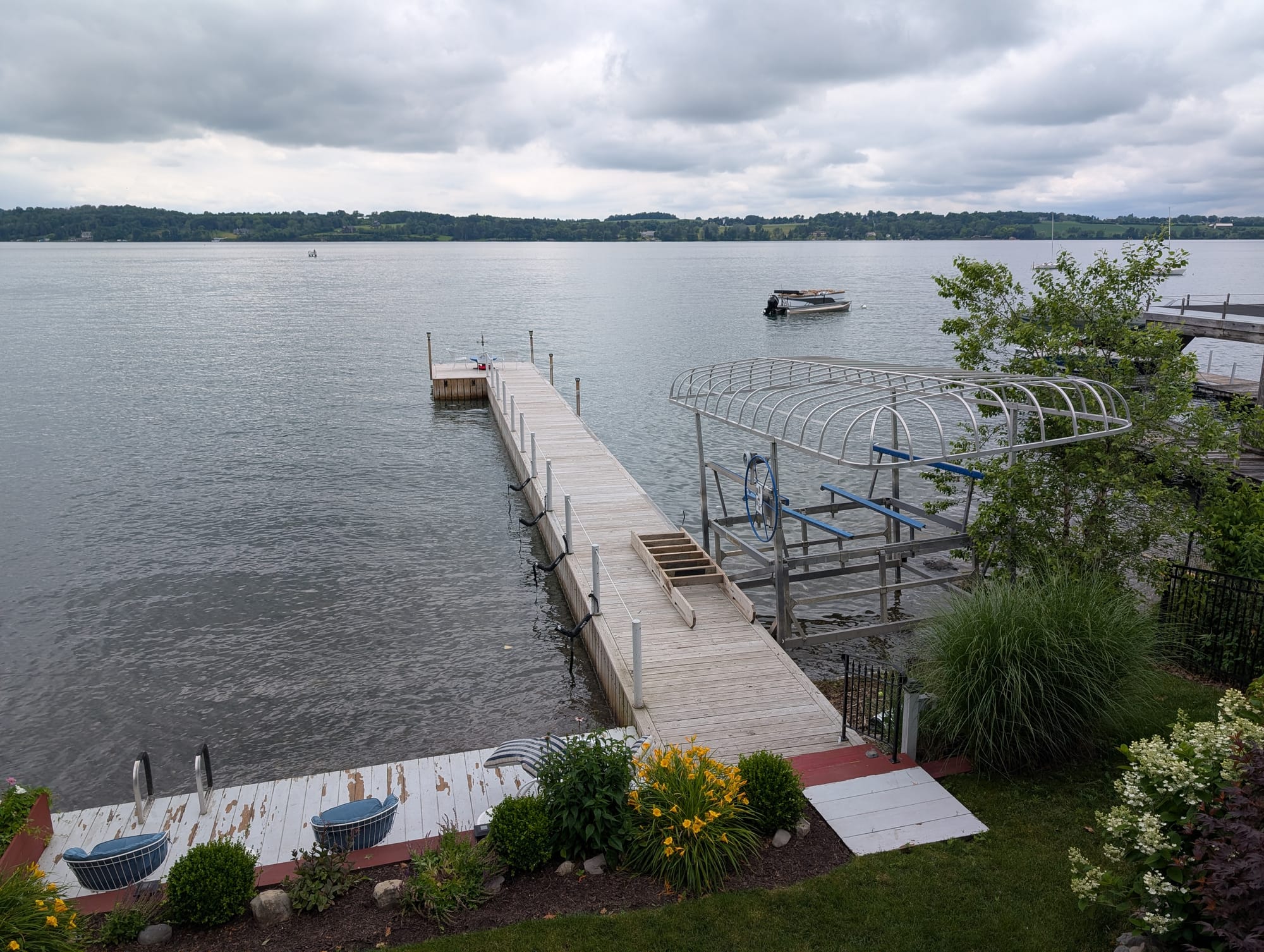
Day 3 at the Lake: Overcast Skies and Missing Boats
Let’s set the scene: Day three at the lake. The storms have finally passed, the air is cooler, and the water’s calm (glassy, even). Basically, the kind of day you can get a boat up to max speed. It's certainly the kind of day I'm most likely to enjoy being out on the lake. Except, get this: there’s no boat.
Apparently, the annual “put the boat hoist back in” tradition hit a snag. The guy who was supposed to do it just… didn’t. And he's told us "maybe tomorrow afternoon" every day since we've been here. I’m told this is the lakehouse equivalent of opening your pool, only with more heavy lifting and, apparently, more flakiness.
So, there I am, staring at a perfect lake day with no boat. What’s a person to do? I could stew about it, or I could do what any self-respecting bookworm does: grab a book, find a spot on the dock, and call it a win.
Enter: The Stoic Challenge
The book I picked up for my impromptu dock session? #2 in my stack of emergency lakehouse reads was The Stoic Challenge by William Irvine. And honestly, the timing couldn’t have been better.
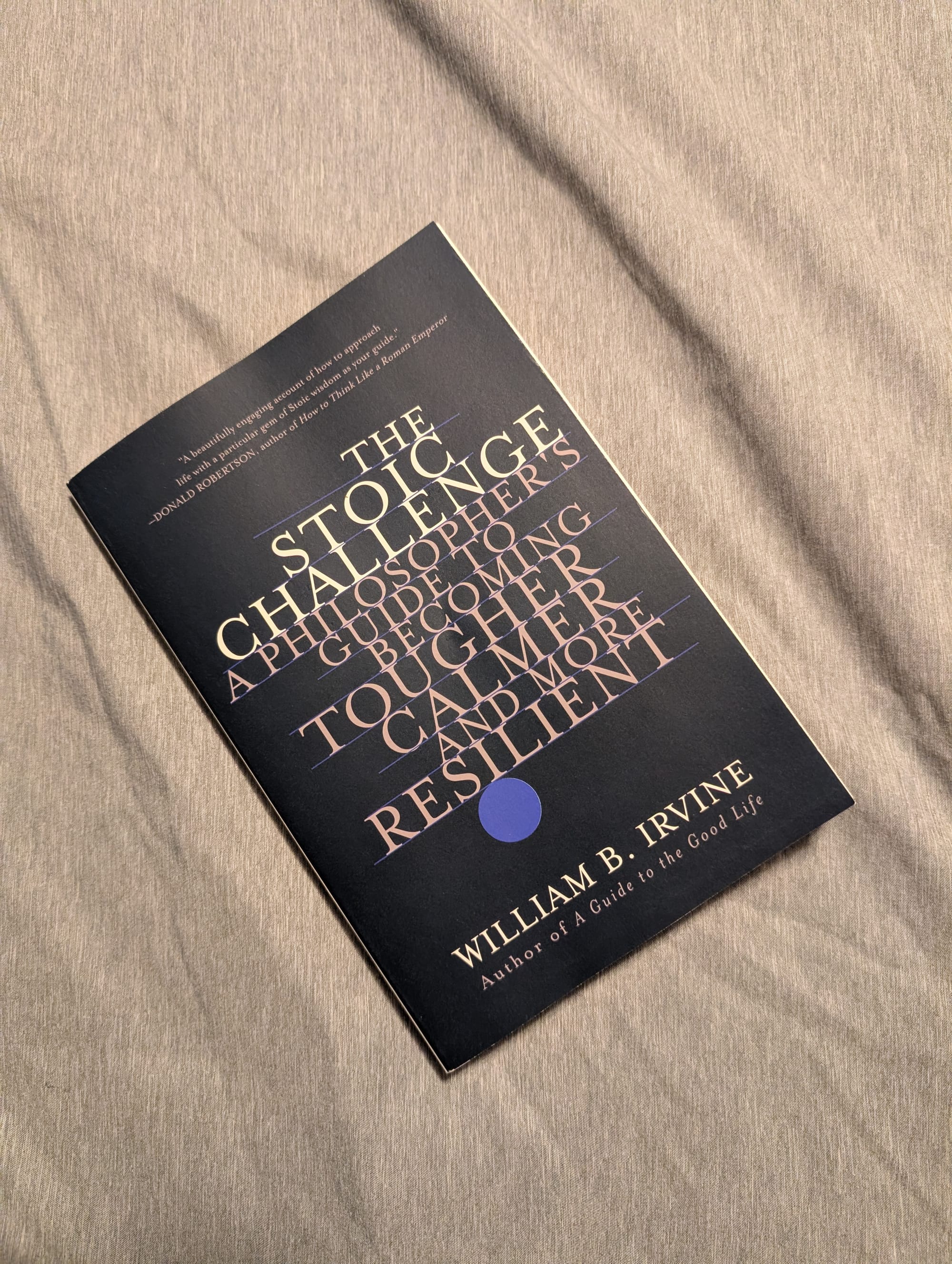
(Side note #1: Yes, I'm a fast reader. Yes, I also sorted the books by length and started with the shortest one. All so I could be able to say something like "I read four books while I was on vacation". Yes this is the 2nd shortest book I ordered. That is all.)
This whole “no boat” situation was basically a real-life demo of the book’s main idea: when life throws you a curveball, you get to decide how to react. Do you let it ruin your day, or do you reframe it as a challenge...a little test from the universe (or, as Irvine would say, from the Stoic gods)?
So, instead of sulking, we went out for brunch, and I spent the rest of the morning and early afternoon reading on the dock. Not exactly what I planned, but there are worse ways to spend a Tuesday.
Book Review: The Stoic Challenge
What’s the Big Idea?
The Stoic Challenge is all about how to handle life’s inevitable setbacks without losing your cool. Irvine draws on ancient Stoic thinkers like Marcus Aurelius and Seneca, but he keeps things practical and light—this isn’t a stuffy philosophy text.
The core strategy? When something goes wrong, treat it like a “Stoic test.” Imagine the Stoic gods are tossing obstacles your way—not to mess with you, but to help you build resilience and resourcefulness. It’s a mental trick, but it works: by reframing setbacks as challenges, you can keep your emotional balance and maybe even enjoy the process.
How Does It Work?
Here’s the gist:
- Reframe setbacks: Instead of seeing problems as disasters, see them as opportunities to practice your Stoic skills.
- Respond, don’t react: Take a beat, avoid the knee-jerk frustration, and decide how you want to handle things.
- Find the upside: Every challenge is a chance to learn, grow, or at the very least, get a good story out of it.
Irvine even suggests using imaginary coaches or mentors if the “Stoic gods” thing feels too out there. The point is to create a little mental distance between you and your annoyance, so you can handle it with more humor and less stress.
Why Bother?
According to Irvine, this approach isn’t just about feeling better in the moment. Over time, it actually makes you tougher, calmer, and more resilient. You start to see setbacks as just part of the game, not personal attacks from the universe. Plus, you get better at finding creative solutions instead of spiraling into frustration.
My Take: Better Than the Last One
Compared to my last lakehouse read (The War of Art), I liked The Stoic Challenge more. The writing is warm, the advice is actionable, and the “Stoic test” frame is genuinely useful—especially if you’re new to Stoicism. I also appreciate that it didn't jump the shark at the end like The War of Art did.
But here’s the thing: if you’ve already familiar with Stoicism, there’s not a ton of new ground here. The “reframe your setbacks” idea is Stoicism 101. Irvine packages it nicely, but it’s basically philosophical training wheels. Helpful for beginners, but maybe a little basic for someone already familiar with the core concepts of Stoicism.
It’s like a golf swing drill you practice on the range. It's useful for building fundamentals, but you probably won’t think about it much once you’re out on the course.
A Stoic Detour in Barbados
This wasn’t the only time a little Stoicism came in handy on vacation. Flashback to last Christmas: we were in Barbados with another couple, enjoying some much-needed sunshine.
We asked the hotel staff to set up a shopping trip into town for us so we could get off the resort before everything shut down for Christmas. We assumed the charge would just go on the room, but at the end of the day, we learned we needed to pay the driver directly. Cue the scramble.
So, I hop back in the car with the driver, find an ATM, and settle up. Sure, I lost twenty minutes, but I also dodged the 20% hotel surcharge. When I got back, one of our friends remarked how impressed she was with how I handled it. I just shrugged and said, “Why let a little inconvenience ruin a beautiful day? Besides, they were trying to do us a favor and save us some money.”
It was a small thing, but a perfect example of the Stoic mindset in action: don’t let minor hiccups derail your happiness. Sometimes, the best stories come from the detours.
(Side note #2: Megan could tell you plenty of stories where I got totally annoyed by minor annoyances and let it ruin my day. I, of course, picked an anecdote that made me look good while highlighting a point—you would too. Again, that is all.)
Who Should Read It?
- Do you struggle with life's little annoyances? This is a great, approachable starting point at how the Stoic's view these kinds of things. It’s easy to read, not preachy, and full of practical tips.
- Already familiar with Stoic philosophy? You might find it a little repetitive, but the “Stoic challenge” frame is still a handy tool for your mental toolkit.
- Looking for a quick, actionable read? This fits the bill, perfect for a lazy afternoon or, say, a boatless day at the lake.
Actionable Takeaways
- Reframe setbacks as “tests” to practice resilience.
- Pause before reacting: give yourself five seconds to choose your response.
- Use humor or storytelling to shift your perspective.
- Expose yourself to small challenges on purpose to build your “Stoic muscles” (try a new skill, take a cold shower, skip the easy option now and then).
- Remember: setbacks are inevitable, but suffering is optional.
Final Thoughts
So, no boat? No problem. Thanks to The Stoic Challenge, I got a reminder that how you handle a setback is way more important than the setback itself. Would I recommend the book? For most people, yes, especially if you’re one to struggle with life's little annoyances. For the seasoned philosophers out there, maybe just skim it for the mental exercises.
And if you ever find yourself stuck on a dock with nothing but a book and a little boredom? Consider it a Stoic test. You might just end up with a good story—or at least a blog post.
If you’ve read The Stoic Challenge (or have your own “boatless day” story), let me know in the comments. Misery might love company, but I think Stoics just love a good challenge.