When You Forget Your E-Reader
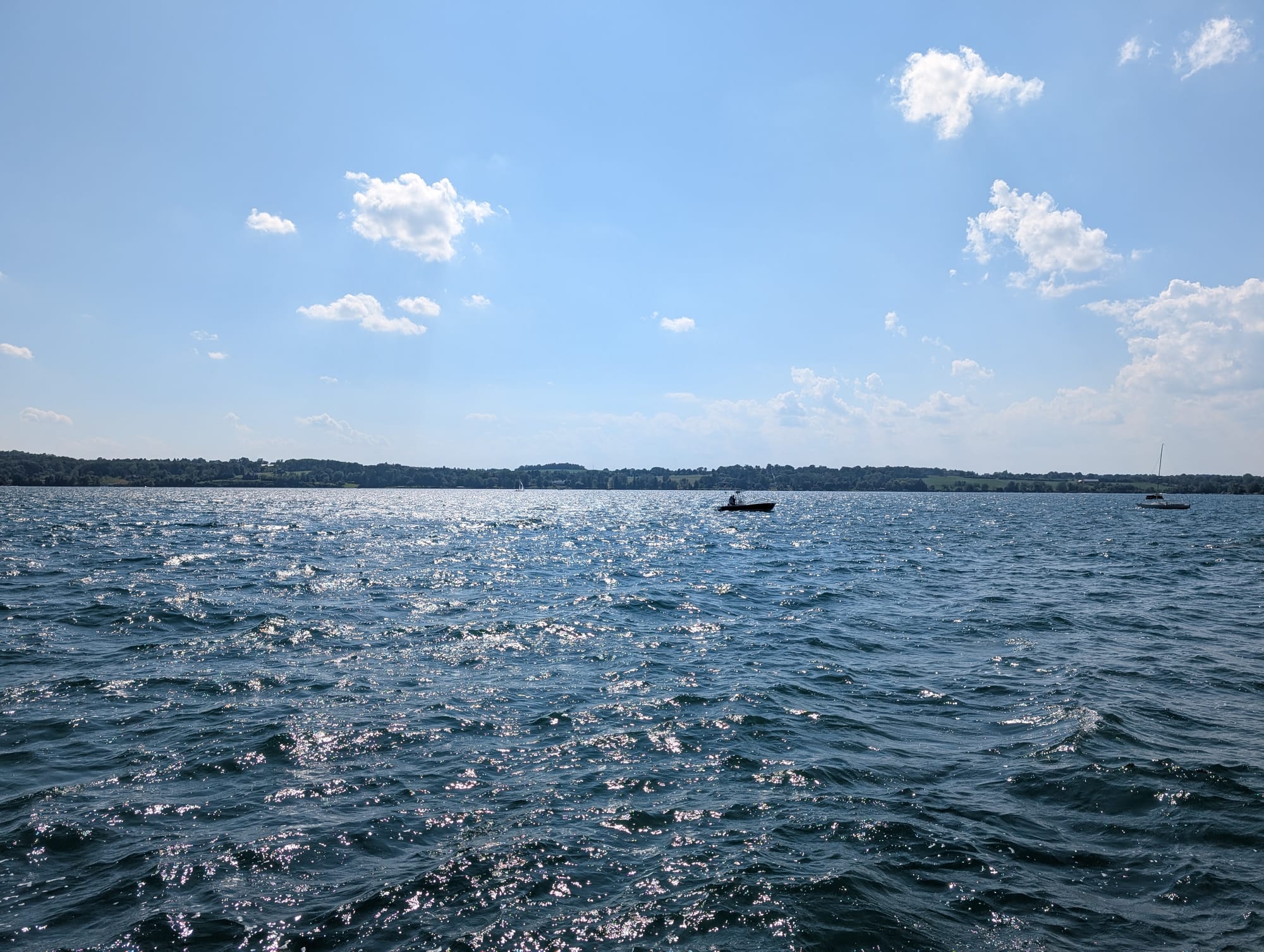
Let’s set the scene: I’m at the lakehouse, ready for a few days of unplugged relaxation (in between doing some maintenance for my in-laws). Except, in my rush to get out the door, I forgot my Nook. (Yes, I’m a Nook person. Yes, I know, I’m probably keeping Barnes & Noble in business singlehandedly, even though Amazon gets the rest of my money.) So, with nothing to read, I did what any book lover would do—I ordered a box of “real” books from Amazon and had them shipped to the lake.
The first book I pulled from the box? The War of Art by Stephen Pressfield. I’d heard a lot about it...some people call it life-changing, and it's on a lot of YouTubers "must read" lists. I figured, why not see for myself? Also, it was short so I figured I could finish it in an afternoon.

First Impressions: “Kind of a Weird One”
Right off the bat, The War of Art is not your typical self-help or creativity book. It’s structured into three “books” (sections), each with its own focus. The chapters are short—sometimes just a page or even a paragraph—which makes it easy to read in bursts. But the tone? It’s a bit intense, a little grandiose, and, honestly, kind of weird in places.
But let’s break it down section by section.
Book One: Resistance, The Enemy Within
What Is “Resistance”?
Pressfield opens with what he calls “Resistance”, that invisible force that keeps us from doing the things we know we should be doing. Want to write a novel? Start a business? Go to the gym? Resistance is the voice in your head telling you to check Instagram, do the laundry, or reorganize your sock drawer instead.
Pressfield doesn’t just call it procrastination—he gives it a capital “R” and treats it like a living, breathing enemy. He says:
“Resistance is fear. But Resistance is too cunning to show itself naked in this form. Why? Because if Resistance lets us see clearly that our own fear is preventing us from doing our work, we may feel shame at this. And shame may drive us to act in the face of fear.”
Rationalization: Resistance’s Sneaky Sidekick
It’s not just about laziness. Pressfield points out that Resistance comes disguised as rationalization; those perfectly logical reasons we come up with to avoid doing the hard stuff. “I’ll start tomorrow.” “I need to do more research.” “I’m just not inspired today.” Sound familiar?
(As a side note, has anyone else started using colons and semi-colons again instead of em-dashes so your writing feels less like it's AI generated?)
My Take
Honestly, this part was…fine. I mean, who hasn’t struggled with procrastination? Pressfield’s framing is dramatic, but the core idea is solid: the hardest part of any creative work is starting, and there’s always a reason not to.
Did I learn something new? Not really. But it’s a good reminder that we all fight this battle, and naming it can help.
Book Two: Turning Pro, The Cure for Resistance?
Amateurs vs. Professionals
The second section is all about what Pressfield calls “turning pro.” The idea is that the only way to beat Resistance is to approach your work like a professional, not an amateur. That means showing up every day, rain or shine, inspiration or not. The professional doesn’t wait for motivation. They do the work because it’s their job.
He writes:
“Aspiring artists defeated by Resistance share one trait. They all think like amateurs. They have not yet turned pro. The moment an artist turns pro is as epochal as the birth of his first child. With one stroke, everything changes.”
The Daily Grind
Pressfield is big on routines and discipline. He argues that creativity isn’t about waiting for the muse to show up—it’s about putting in the hours, day after day. The muse, he says, rewards those who do the work.
My Take
This section resonated with me a bit more. I’ve seen firsthand how much more productive I am when I treat writing (or any creative project) as a job, not a hobby. But again, this isn’t exactly groundbreaking stuff. The “show up and do the work” mantra is everywhere, from sports to business to art.
Still, Pressfield’s framing, drawing a hard line between amateurs and pros, can be motivating if you’re stuck in a rut. If you need a kick in the pants, this section delivers.
Book Three: Muses, Angels, and…Wait, What?
The Spiritual Turn
Here’s where things got weird for me. In the third section, Pressfield dives headfirst into the mystical. He talks about muses, angels, and “a higher realm” from which all creative inspiration flows. He even includes an “Invocation of the Muse” inspired by Homer’s Odyssey.
He suggests that when we sit down to work, we’re not alone. We’re calling on unseen forces to help us create. He writes about the importance of humility, of recognizing that our best ideas don’t come from us alone, but from some divine or universal source.
The Higher Realm
Pressfield describes this “higher realm” as the source of all creativity. He believes that by showing up and doing the work, we attract inspiration from this mystical place. It’s not just about grit and discipline anymore; it’s about being open to something bigger than yourself.
My Take
Honestly? This is where he lost me. Maybe I’m too pragmatic, but the talk of muses and angels felt tacked on, like he had more to say but wasn’t sure how to wrap things up. I get that some people find this kind of spiritual framing inspiring, but for me, it just didn’t land.
I found myself skimming these chapters, looking for nuggets I could use. But mostly, I just wanted to get to the end.
Did I Like the Book?
In a word: No. I didn’t hate it, but I didn’t love it either. I don't think I'd recommend it.
What I Liked
- Short, punchy chapters: Easy to read in small bursts, which was perfect for vacation mode.
- The concept of Resistance: Naming the enemy can be empowering, even if it’s just a fancy way to talk about procrastination.
- The “turn pro” mindset: A good reminder that showing up every day matters, even when you don’t feel like it.
What I Didn’t Like
- Overly dramatic tone: The capital-R Resistance, the war metaphors, the mystical stuff—it all felt a bit much.
- Not much new: If you’ve read other books on creativity or productivity, you’ve probably heard most of this before.
- Book Three: The spiritual turn just didn’t connect for me. I’m all for inspiration, but I don’t need to invoke the muses to get my work done.
Did I Learn Anything New?
Nope. But I did get a solid reminder: the only way forward is through. If you want to create something (write a book, start a business, run a marathon) you have to do the work, day after day, whether you feel like it or not.
And sometimes, that’s enough. Sometimes, we don’t need a brand-new insight, we just need someone to remind us to get off the couch and start.
Are There Better Books Out There?
Absolutely. If you’re looking for books on creativity, motivation, or beating procrastination, here are a few I’d recommend over The War of Art:
- Atomic Habits by James Clear: Practical advice on building habits that stick. (I think Jeff Miller bought this for the entire revenue org while I was at Cockroach Labs).
- Ego is the Enemy by Ryan Holiday: How humility and discipline fuel creative success.
- The Hard Thing About Hard Things by Ben Horowitz: "No easy answers, only lead bullets"—push through resistance, uncertainty, and setbacks to create something lasting.
(Another side note, I've worked at enough a16z companies to have actually met Ben and seen him speak. Interesting guy.)
Final Thoughts: Worth Reading?
If you’re new to the world of creative self-help, The War of Art might hit home. It’s short, direct, and occasionally inspiring. But if you’ve already read a few books in this genre, you might find yourself, like me, nodding along and waiting for something new.
Still, it was a decent way to pass an afternoon at the lake not looking at my phone.
Have You Read It?
If you’ve read The War of Art, I’d love to hear your thoughts. Did the talk of muses and angels inspire you, or did it feel a little out there? What books have helped you push through Resistance?
Drop a comment below—I’m always looking for new recommendations (especially since I’ll probably forget my Nook again).